Declaration of completeness in LUCID: thresholds, deadline and 2026 transition
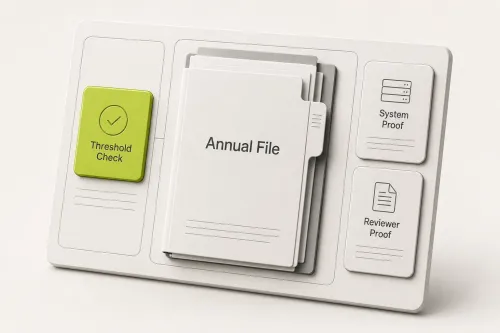
At a Glance
Key Takeaways
- A declaration of completeness is required when at least one packaging volume threshold was reached or exceeded in the previous year.
- The thresholds are 80 tonnes of glass, 50 tonnes of paper, cardboard and carton, or 30 tonnes of the other relevant material categories.
- The declaration is generally due by 15 May, is submitted electronically in LUCID and requires confirmation by a registered reviewer.
- Reference year 2026 is governed by a transition between VerpackG and VerpackDG.
Direct answer: A company must submit a checked declaration of completeness when its packaging volumes in the previous calendar year reach at least one statutory threshold. ZSVR or a competent state authority may also request one below the thresholds. For reference year 2026, only one unified declaration under section 10 VerpackDG is required. The legal change during the year must be considered in the review.
The declaration is an additional annual obligation. It does not replace regular LUCID quantity reporting or system participation. The practical issue is whether annual totals, material groups, system confirmations and review evidence are consistent.
Which thresholds trigger the duty?
One threshold is enough. A company does not need to reach all three.
| Material group | Previous year threshold |
|---|---|
| Glass | 80 tonnes |
| Paper, cardboard and carton | 50 tonnes |
| Other relevant materials, including metals, plastics, beverage cartons and composites | 30 tonnes |
Below these quantities, there is no automatic annual duty for every company. ZSVR or the competent state authority may still require a declaration regardless of the thresholds.
What is the deadline?
The declaration is due each year by 15 May for the previous calendar year. If the date falls on a weekend or statutory holiday, it moves to the next working day. ZSVR states that the deadline cannot be extended.
What applies to reference year 2026?
VerpackDG has applied since 12 August 2026. For reference year 2026, only one unified declaration under section 10 VerpackDG is required. A second declaration under the former section 11 VerpackG is not required.
The ZSVR review guidelines dated 19 November 2024 apply throughout reference year 2026. Manufacturer status, packaging categories and system participation must still be assessed with the legal change on 12 August in mind. Companies should therefore recheck current ZSVR guidance before submission.
How does submission in LUCID work?
The process is fully electronic. The company starts the declaration in LUCID, selects the reference year and submission reason, assigns a registered reviewer and enters the relevant quantities. Three components are then created or uploaded:
- the company declaration,
- the registered reviewer confirmation,
- the review report.
A contractual relationship must exist before the reviewer is selected. ZSVR provides a public reviewer register. The company declaration and reviewer confirmation require the reviewer's qualified electronic signature.
What does the declaration contain?
The declaration covers more than packaging subject to system participation. Depending on the applicable reference year, it includes quantities by material type, participation with one or more systems, relevant packaging that typically becomes waste outside private households, and quantities handled through approved sector solutions or return routes. The review therefore needs a complete annual picture, not only one export from LUCID.
A useful decision check is simple. First, compare the previous year quantities with all three thresholds. Second, confirm whether an official request exists even below the thresholds. Third, determine whether the internal records can be reconciled with system confirmations and supporting documents. If one of these checks is unclear, resolve it before the reviewer starts the final review.
Which data should be prepared internally?
- annual quantities by material group,
- a traceable classification of packaging,
- system contracts and quantity confirmations,
- information on sector solutions or returns where relevant,
- records and analyses needed for the review.
Collecting this information from separate spreadsheets shortly before May increases the risk of inconsistencies. A clear packaging data structure and reviewable evidence make discrepancies visible earlier. This does not replace legal assessment or independent review, but it improves preparation.
The next practical step
Compare the previous year totals with all three thresholds. If one threshold is reached or an authority requests a declaration, involve a registered reviewer early. Then reconcile internal quantities, system confirmations and LUCID data before the declaration is generated.
Sources
- ZSVR: Declaration of completeness duty · ZSVR
- ZSVR: Declaration review guidelines · ZSVR
- VerpackDG section 10: Declarations of completeness · Bundesministerium der Justiz / Bundesamt für Justiz
- VerpackDG section 68: Transition rules for 2026 · Bundesministerium der Justiz / Bundesamt für Justiz